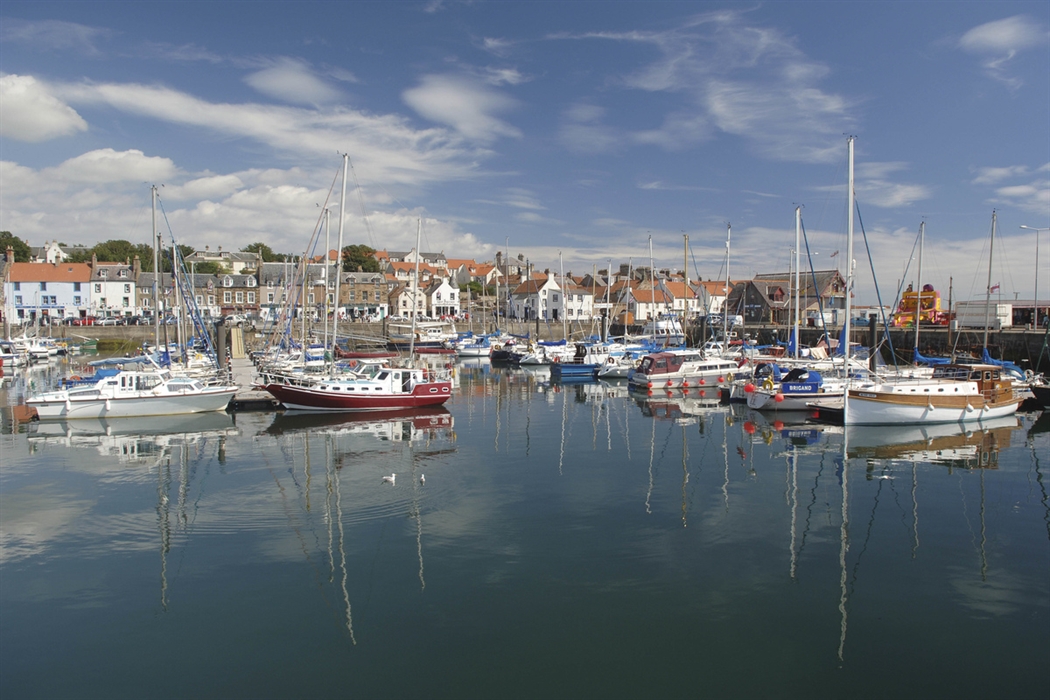
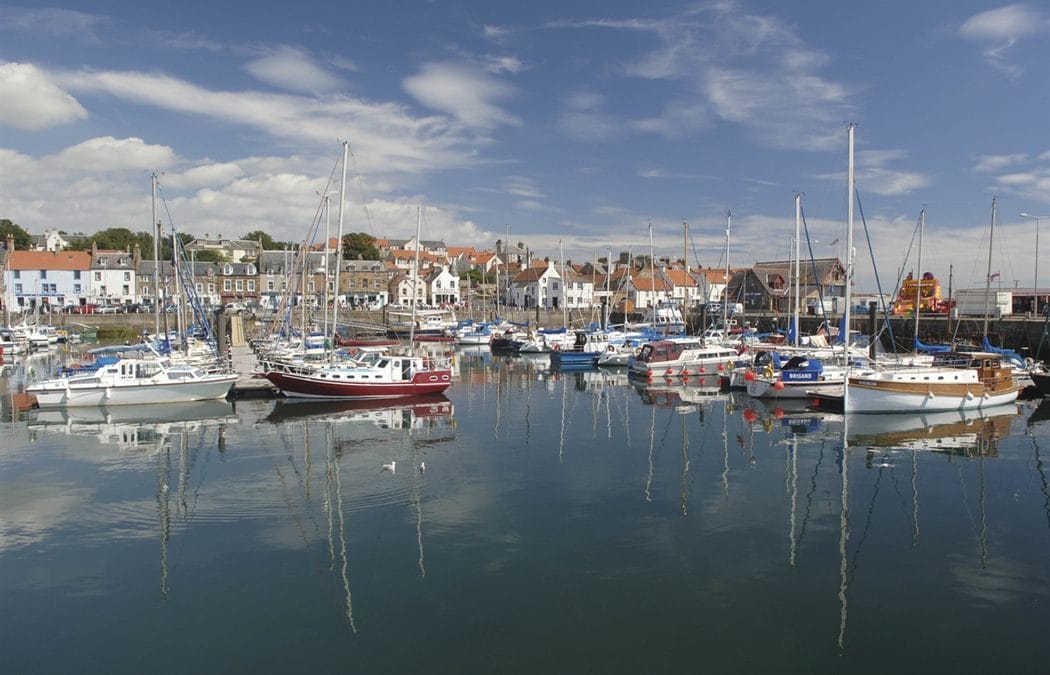
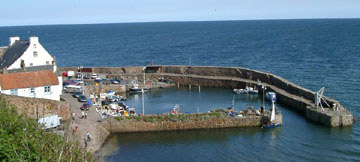
The eastern part of the Fife peninsula is known as the East Neuk; neuk being the old Scots word for a corner. This is a quiet, peaceful area, with farmland and pretty fishing villages dotted along the North Sea coast. Fishing was once the mainstay of this area, and herring were landed in their thousands up and down the coast. Today the fishing industry has moved further north, but a small number of commercial boats remain, nowadays mainly fishing for shellfish. The villages are characterised by their white harled buildings and red pantile roofs
Crail: the handsome harbour town of Crail has one of the prettiest harbours in the area and is well known for shellfish. Cobbled streets lead down to the harbour (best explored on foot) while up in the town the wide Marketgate was once one of the largest medieval markets in Europe. Some nice little craft shops and art galleries make Crail a lovely place for a wander.
Anstruther: Another charming harbour with many pleasure boats berthed here. You can get out on the water here and take a boat trip from Anstruther to the Isle of May, a haven for puffins and other seabirds located a few miles offshore in the Firth of Forth. Anstruther is home to the Scottish Fisheries Museum, and the local fish and chip shop was voted best in Scotland some years back – highly recommended if lunch or dinner is on your mind!
Pittenweem: The most active of the Fife harbours today, fishing boats are a regular sight heading in and out to sea. Another town which is popular with artists, there are local galleries and an excellent little arts festival which is held each year at the beginning of August.

Related posts
Happy 250th birthday to the USA! 🇺🇸🏴
Did you know Edinburgh Castle is home to one of the earliest depictions of the Star Spangled Banner outside of North America?
Deep inside the vaults of the castle, back in about 1780, Americans captured during the Revolutionary War were incarcerated in the castle prisons. One prisoner scratched out a faint image of a ship flying the Stars and Stripes on his wooden cell door. A quiet act of defiance by a sailor far from home, you can still see this if you visit the vaults today!
#bluebadgeguides #scottishtouristguidesassociation #britishguildoftouristguides #scotland #scotlandlover #scotlandexplore #scotlandshots #scotlandisnow #scotlandtravel #scottish #castle #scottishcastles #IndependenceDay #USA250
... See MoreSee Less
1 CommentsComment on Facebook
I use all of these, all the time! My granny used to tell me I was “as thrawn as a bag o’ weasels” when I was a wee girl 😂💙🏴The Scots language has words for things no other language bothered to name.
Dreich — that specific grey, damp, miserable weather that isn't quite rain but isn't quite not rain either. The English say "overcast." The Scots say dreich, which sounds exactly like it feels.
Thrawn — stubborn in a particular way. Not just obstinate. Twisted, contrary, determined to do it the wrong way on purpose. There is no English equivalent because English speakers apparently gave up trying to describe this personality type.
Glaikit — vacant. Dopey. The expression on someone's face when the lights are on but nobody is home.
Couthie — warm, friendly, comfortable in a homely way. The feeling of a kitchen that smells like baking and has a dog asleep by the fire.
Wheesht — be quiet. But with feeling. Haud yer wheesht is the full version, and it means be quiet right now and I mean it.
Scunnered — utterly fed up. Beyond tired of something. A level of exasperation English doesn't have a single word for.
Every language reveals the priorities of the people who speak it.
Scottish priorities, apparently, include very specific weather, very specific stubbornness, and very specific silence.
Which one is your favorite? 👇
#ScottishHistory #ScottishHeritage #ScotsLanguage #ScottishWords
... See MoreSee Less
1 CommentsComment on Facebook