
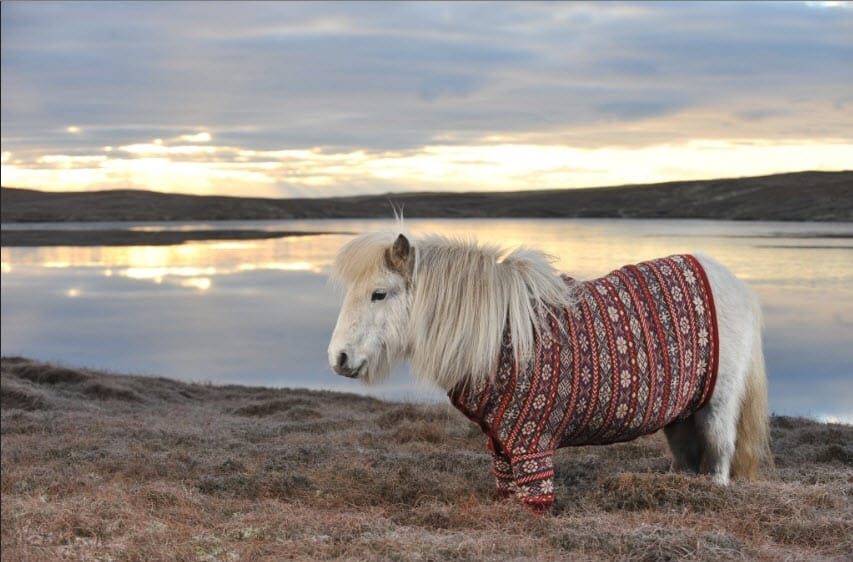
Lying 110 miles north of the coast of mainland Scotland, the Shetland Isles are the most northerly outpost of the British Isles. The largest island is known as the “mainland” and the capital, Lerwick, can be reached by ferry (from Aberdeen or Orkney) or by air. In fact, over 100 islands make up the Shetland archipelago, of which 16 are inhabited. Inter-island ferries serve the outlying islands and are a convenient way to travel around. Despite being located at the same latitude as Anchorage, Alaska, the islands have a temperate climate thanks to the warm ocean currents of the Gulf Stream, meaning long, cool winters and short, mild summers.
Like the neighbouring Orkney Islands which lie 50 miles to the south west, the Shetland Islands have a wealth of prehistoric sites including the Jarlshof settlement and the Iron Age Mousa Broch. The Norse heritage of the islanders is celebrated every winter during the Up Helly Aa fire festival where a replica Viking longboat is burned amid much singing and celebration.
Shetland is known for its unspoilt landscapes and is home to three national nature reserves, where you can see a variety of species including storm petrels, otters, seals and porpoises. And of course, you are very likely to spot the famous indigenous Shetland ponies!
We would recommend a minimum of three days in Shetland which will allow you plenty of time to explore these magnificent islands.

Related posts
I use all of these, all the time! My granny used to tell me I was “as thrawn as a bag o’ weasels” when I was a wee girl 😂💙🏴The Scots language has words for things no other language bothered to name.
Dreich — that specific grey, damp, miserable weather that isn't quite rain but isn't quite not rain either. The English say "overcast." The Scots say dreich, which sounds exactly like it feels.
Thrawn — stubborn in a particular way. Not just obstinate. Twisted, contrary, determined to do it the wrong way on purpose. There is no English equivalent because English speakers apparently gave up trying to describe this personality type.
Glaikit — vacant. Dopey. The expression on someone's face when the lights are on but nobody is home.
Couthie — warm, friendly, comfortable in a homely way. The feeling of a kitchen that smells like baking and has a dog asleep by the fire.
Wheesht — be quiet. But with feeling. Haud yer wheesht is the full version, and it means be quiet right now and I mean it.
Scunnered — utterly fed up. Beyond tired of something. A level of exasperation English doesn't have a single word for.
Every language reveals the priorities of the people who speak it.
Scottish priorities, apparently, include very specific weather, very specific stubbornness, and very specific silence.
Which one is your favorite? 👇
#ScottishHistory #ScottishHeritage #ScotsLanguage #ScottishWords
... See MoreSee Less
1 CommentsComment on Facebook
Hope everyone has been enjoying the antics of the Tartan Army over in Boston for the World Cup! Glad to see the Glasgow tradition of putting cones on statues is alive and well across the pond 😂⚽️🏴The Scottish fans didn't just bring bagpipes and beer to Boston.
They brought traffic cones for the statues too.
... See MoreSee Less
3 CommentsComment on Facebook
