

Over to the east is Carnoustie, another British Open venue where the first record of golf being played was in 1650. The first formal course there was formed in 1842 and over the years this links course, with the wind blowing off the North Sea, has tested the greatest talents in world golf. Carnoustie was the scene of the great Ben Hogan’s only British Open success in 1953, the year he also won the US Masters and the US Open. More recent winners of the Open at Carnoustie are Gary Player and, in 1999, Scotland’s own Paul Lawrie.Muirfield, venue of the British Open Championship in 2002, and home of the ‘Honourable Company of Edinburgh Golfers,’ the oldest golf club in the world, is situated just east of Edinburgh. The Honourable Company originally played at Leith Links in Edinburgh, then at Musselburgh situated between the Capital and Muirfield, and actually devised the first set of rules for the game in the year 1744. In recent history, British Open winners at Muirfield include Gary Player, Jack Nicklaus, Lee Trevino, Tom Watson, Nick Faldo (twice) and in 2002, Ernie Els.
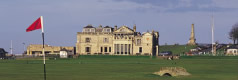
 Its thought that golf has been played on the links at St Andrews in Fife since the 12th century. However it wasn’t until 1754 that the St Andrews Golf Club was formed and in 1834, while the “Honourable Company” was in temporary decline, it successfully petitioned King William IV for permission to refer to themselves as “The Royal & Ancient Golf Club.” From 1897, having adapted the original rules of the Honourable Company, the R &A became the authority on golfing rules and regulations which continues to this day. The championship “Old Course” at St Andrews is the target for all golfers visiting Scotland. The “New Course” and the “Jubilee Course” which run alongside the “Old Course” together attract thousands of visitors every year. The history of the Open Championship at St Andrews and the other major events staged there over the years is too vast to do justice to it in a few words or lines in this website. Its quite simply the “Home of Golf” with the “Old Course” the one everyone dreams of playing.
While the above courses are the biggest tests for golfers visiting Scotland, and are understandably the ones Guests want to play, there are a vast number of Golf Clubs with courses of widely varying
standards throughout the Country where visitors are made very welcome.
“Scottish Highland Trails” are happy to construct vacation itineraries based on golf including whichever courses, or areas of Scotland you would like. As with everything else, we rely on you to tell us the type of golf that interests you and leave us to do the rest.
Please Note:
Many of the top courses in Scotland are used for competitions throughout the year and have rules restricting visitors obtaining tee-times. This results in us being unable to guarantee availability on any course until we have agreed firm dates with our Guests, and then approached the course management[s] with a view to making confirmed reservations.
Some courses require players to apply for reservations personally. In such circumstances we can advise of requirements and how best to go about the application.